
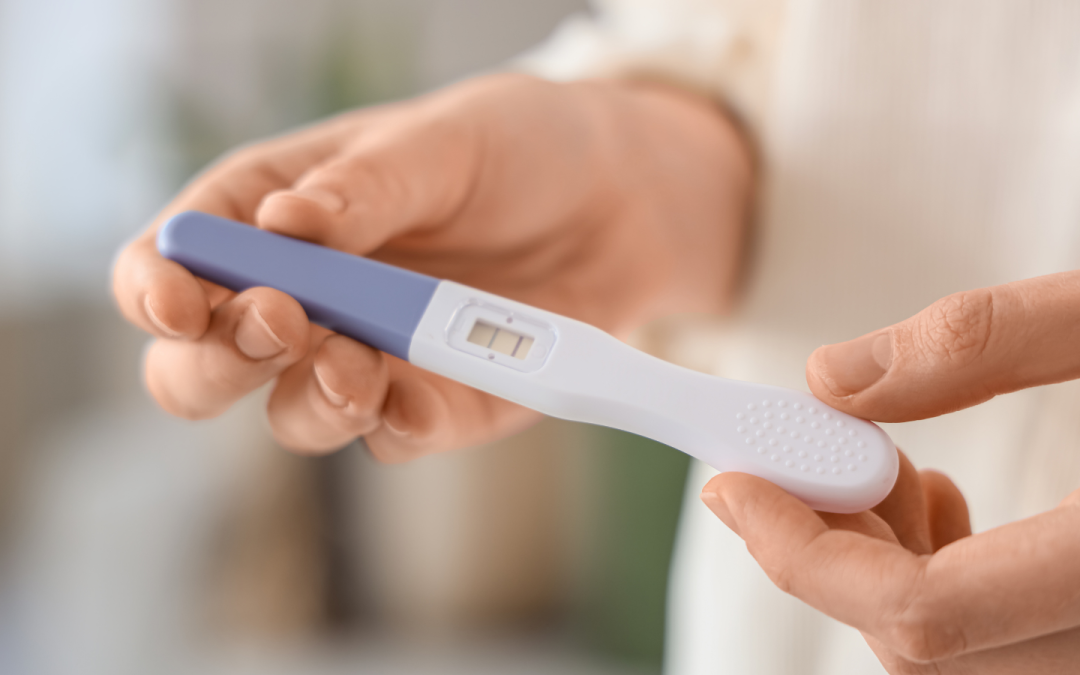
Discovering that you’re pregnant can be a moment of joy, anxiety, or even confusion. Whether the news was expected or unexpected, it’s important to take a deep breath and give yourself time to process. But once the shock settles, you might be asking yourself, “What’s next?” As you start to weigh your pregnancy options & figure out your next steps, here are 5 key questions you need to ask – and answer – NOW.
1. Am I Really Pregnant?
First things first: It’s important to confirm that you are really, truly pregnant. While home pregnancy tests are quite reliable, a positive test can sometimes occur due to factors like medication, hormonal imbalances, or even a chemical pregnancy. (American Pregnancy Association). So, how do you confirm?
Medical-Grade Pregnancy Test
To be certain of your pregnancy, it’s important to confirm with a healthcare professional. Medical-grade pregnancy tests, often done at clinics or doctor’s offices, tend to be more accurate than the ones you use at home. These tests measure the level of human chorionic gonadotropin (hCG) in your urine or blood, which is the hormone your body produces during pregnancy.
If you’ve received a positive result on a home pregnancy test, it’s a good idea to make an appointment with a doctor, nurse, or a local pregnancy center like Heartline, for a more accurate confirmation. This confirmation can help rule out a false positive and ensure that you’re on the right track for the next steps.
If you live in the Warsaw, Indiana area, you can schedule a free pregnancy confirmation appointment with Heartline by texting 574-635-1272.
Why a Pregnancy Confirmation Matters
Getting a medical confirmation of pregnancy is the first step in weighing your pregnancy options, as it ensures you won’t be stressing about next steps unnecessarily. A medical pregnancy confirmation also gains you access to various pregnancy support programs like WIC & Pregnancy Medicaid, and also opens the door to follow-up services like ultrasound scans.
2. Is the Pregnancy Viable?
Now that you know you’re pregnant, the next big question is: Is the pregnancy viable? A viable pregnancy is one that is developing normally and has a good chance of progressing to full term. According to Cleveland Clinic, between 8-20% of pregnancies end in miscarriage within the first 13 weeks. As you weigh your pregnancy options, knowing whether the pregnancy is likely to continue is important.
The Importance of an Ultrasound
The most accessible way to establish early pregnancy viability is through an ultrasound scan (American Pregnancy Association). This test uses sound waves to create an image of the embryo or fetus in the womb. By allowing accurate measurement, it helps determine several things:
- Whether development is on track: The fetal measurements made possible by the ultrasound scan reveal whether growth is happening normally. If measurements are significantly smaller than what would be indicated by the estimated due date calculated from that last menstrual period (LMP), the pregnancy may not be viable.
- Fetal heartbeat: A healthy fetal heartbeat is one of the first signs of a viable pregnancy. At 8 weeks pregnant – when many first ultrasound scans take place – a normal fetal heart rate is between 140 and 170 beats per minute. If there is no heartbeat detected on the ultrasound scan, it may indicate a non-viable pregnancy.
- Location of pregnancy: The ultrasound will confirm whether the pregnancy is in the uterus, where it should be. One of the most important reasons to get an ultrasound scan in early pregnancy is to rule out an ectopic pregnancy, which can be life-threatening and requires immediate medical care.
- Multiple pregnancies: Because multiple pregnancies bring additional risks & often require earlier medical care, it is important to confirm with an ultrasound if more than one heartbeat is present.
Why Establishing the Viability of Your Pregnancy Matters
The information provided by an ultrasound scan is important as you weigh your pregnancy options. Without it, you are essentially “flying blind” through your pregnancy and risking potential health complications that could be prevented with this early, non-invasive scan.
At Heartline, you can schedule a no-cost ultrasound appointment from 7 weeks through 12 weeks gestation. At the ultrasound appointment, we will also share information about how to get connected to local prenatal care providers and other resources relevant to your unique situation.
3. How Far Along Am I?
After confirming that your pregnancy is viable, it’s time to figure out how far along you are. The good news? There is not an additional pregnancy scan or medical appointment needed to answer this question! The fetal measurements taken during the ultrasound scan also help pinpoint your due date. And they do so with much more accuracy than calculating based on your last menstrual period (LMP) date.
To learn more about what to expect during a pregnancy ultrasound scan, check out this blog post.
Why Knowing How Far Along You Are Matters
Knowing how far along you are is important because it affects your care and the pregnancy options available to you. For example, if you are considering a chemical abortion (the “abortion pill”), getting an ultrasound to establish how far along you are is crucial due to gestational limitations for the medication. (Note that Heartline does not perform or refer for abortions.)
Knowing how far along you are also helps you understand what to expect – and what is normal – at different points during pregnancy. Which symptoms are typical, vs. which ones indicate a visit to the ER may be in order? Establishing an accurate gestational age is key.
And perhaps most important? Identifying an accurate due date helps ensure you are getting the right prenatal care at the right time.
4. Do I Have an STI?
If you’re newly pregnant, or if this pregnancy is unplanned, it’s important to be mindful of sexually transmitted infections (STIs). Even if you’ve had no symptoms, some STIs can go undiagnosed, and untreated STIs can pose serious risks to your health and your pregnancy.
STI Testing Options
Pregnancy Centers like Heartline often offer no-cost STI testing options. Check out more about Heartline’s STI testing services here.
Another opportunity for STI testing usually happens at your first prenatal appointment. Your doctor will ask about your sexual history and may suggest STI testing, especially if you have any risk factors. STIs including chlamydia, gonorrhea, and syphilis, which can be harmful to you and your baby if left untreated (CDC factsheet).
Why Knowing Whether You Have an STI Matters
STIs that go untreated during pregnancy can lead to complications, including premature birth, low birth weight, and in some cases, the transmission of the infection to the baby. Fortunately, most STIs can be treated effectively with antibiotics or other medications, ensuring that you and your baby stay healthy.
If you are considering abortion as a pregnancy option, knowing whether you have an STI prior to any procedures is important so that proper precautions can be taken. (Note that Heartline does not perform or refer for abortions.)
For more about STI’s and Pregnancy, check out this blog post.
5. What Are My Pregnancy Options?
Even after getting the answers to all of the questions so far, it is normal to feel overwhelmed by the pregnancy options in front of you. Generally, there are three main paths each woman chooses from: abortion, adoption, and parenting:
-
- Abortion: Abortion involves the termination of the pregnancy. Chemical / medication abortions are most common in the first 10 weeks of pregnancy. If the pregnancy is further along, a surgical abortion is usually necessary.
- If someone in your life is pressuring you to get an abortion, it is important to know that only you can make this decision, and that there are other options available to you.
- Note that Heartline does not provide or refer for abortions.
- Abortion: Abortion involves the termination of the pregnancy. Chemical / medication abortions are most common in the first 10 weeks of pregnancy. If the pregnancy is further along, a surgical abortion is usually necessary.
-
- Parenting: Choosing to carry your baby & parent once they’re born is another option. A variety of supports offered by family, friends, and community resources can help women who choose this path feel more confident and less overwhelmed by the transition to parenthood.
- Heartline offers a variety of support resources for parents, including our weekly classes, our fatherhood coaching program, and our BABE store.
- Parenting: Choosing to carry your baby & parent once they’re born is another option. A variety of supports offered by family, friends, and community resources can help women who choose this path feel more confident and less overwhelmed by the transition to parenthood.
-
- Adoption: If you are not in a position to raise a child but still want to carry the pregnancy to term, adoption is another option available to you. If you are considering placing your baby for adoption, be sure to find a licensed, reputable adoption agency who will protect your rights as a birth mother.
- Heartline is not an adoption agency, but we partner with multiple trustworthy, licensed adoption agencies who will ensure your rights as the birth mother are protected.
- Adoption: If you are not in a position to raise a child but still want to carry the pregnancy to term, adoption is another option available to you. If you are considering placing your baby for adoption, be sure to find a licensed, reputable adoption agency who will protect your rights as a birth mother.
Note that if you decide to carry your pregnancy but are unsure if parenting or placement for adoption is the best path for you, you have time to decide. The 9 months of pregnancy give you time to research & discuss the options, identify trusted resources and supportive allies, and decide what is best for you and your baby.
Why being Informed about your Pregnancy Options Matters
No matter what option you choose, your decision will be a forever one. So it’s vital to make sure you are equipped with all of the information you need to feel confident that your the pregnancy option you choose is the right one.
Because of the stakes, making this decision on your own can feel overwhelming. Consider reaching out to a trusted healthcare provider or community pregnancy center to discuss your situation and get all of your questions about the available pregnancy options answered.
At Heartline, our client advocates are here to walk through your pregnancy options with you, discuss the risks and realities of each, talk through available supports and resources, answer questions, and listen as you share your worries or concerns. For more about what to expect from an appointment at Heartline, check out this blog post.
Conclusion
If you’ve recently discovered a positive pregnancy test, take a moment to breathe. It’s normal to feel a range of emotions—joy, fear, confusion. But knowing what steps to take next can help bring clarity and confidence.
Confirm your pregnancy with a medical professional, take steps to ensure it’s viable, and get tested for STIs. From there, you can work with your healthcare provider to understand your pregnancy options and receive support.
Remember, you don’t have to navigate this alone. Support is available, and no matter what you decide, there is help to guide you through each step of the process.
If you have more questions about pregnancy symptoms, lifestyle changes, or preparing for appointments, please check out some of our other blog posts or contact Heartline to schedule an appointment. We are here for you!
Heartline offers FREE and CONFIDENTIAL pregnancy tests, ultrasound scans, STI testing, mentoring, coaching, parenting classes, and more.
References:
